
.avif)
So you're shopping for an affiliate tracking platform. Maybe your current setup is held together with spreadsheets and manual reports. Maybe you're scaling up and the tool you started with two years ago just isn't keeping up. Either way, picking the wrong platform is an expensive mistake – and in iGaming, where affiliate programs drive a serious chunk of player acquisition, the wrong call can cost you far more than the subscription fee.
The problem is that most platforms look similar on the surface. They all promise real-time tracking, detailed reporting, and easy integrations. But once you're under the hood, the differences are significant. This guide breaks down the 10 criteria that actually matter when comparing affiliate tracking platforms – so you walk into your next demo knowing exactly what questions to ask.
What Is an Affiliate Tracking Platform and Why Does Getting It Wrong Hurt?
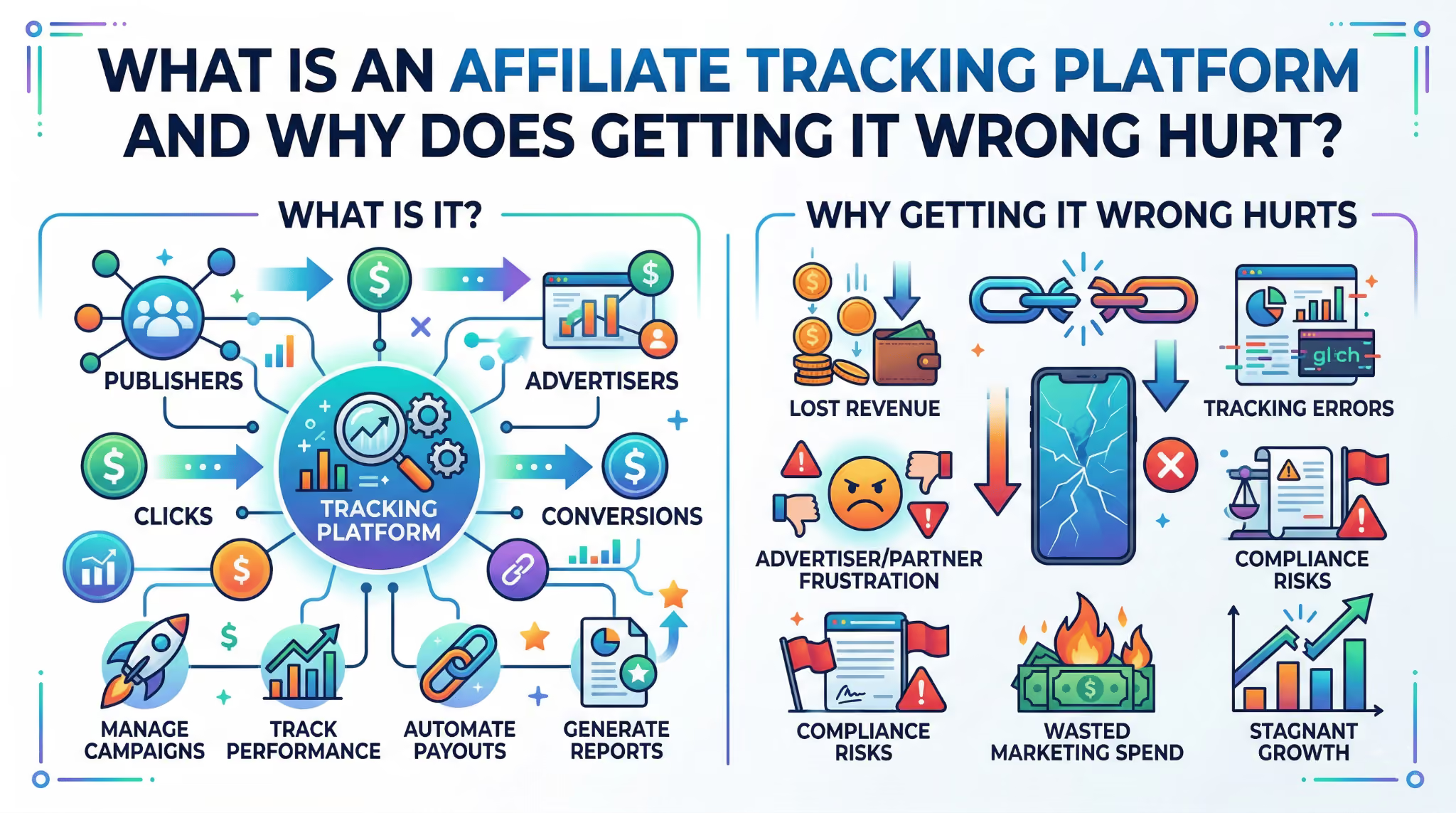
An affiliate tracking platform is the software that manages every part of your affiliate program: who's sending traffic, which players they refer, how much commission they're owed, and whether the numbers add up. For iGaming operators, it's the operational backbone of one of your highest-ROI acquisition channels.
Get it right, and your affiliate managers spend their time building relationships and growing the program. Get it wrong, and they spend their time chasing discrepancies, manually reconciling reports, and dealing with affiliates who don't trust your tracking.
Trust is the word that matters most here. Affiliates will leave a program if they suspect the tracking is off. And in a space where your best partners have options, that's a risk you can't afford.
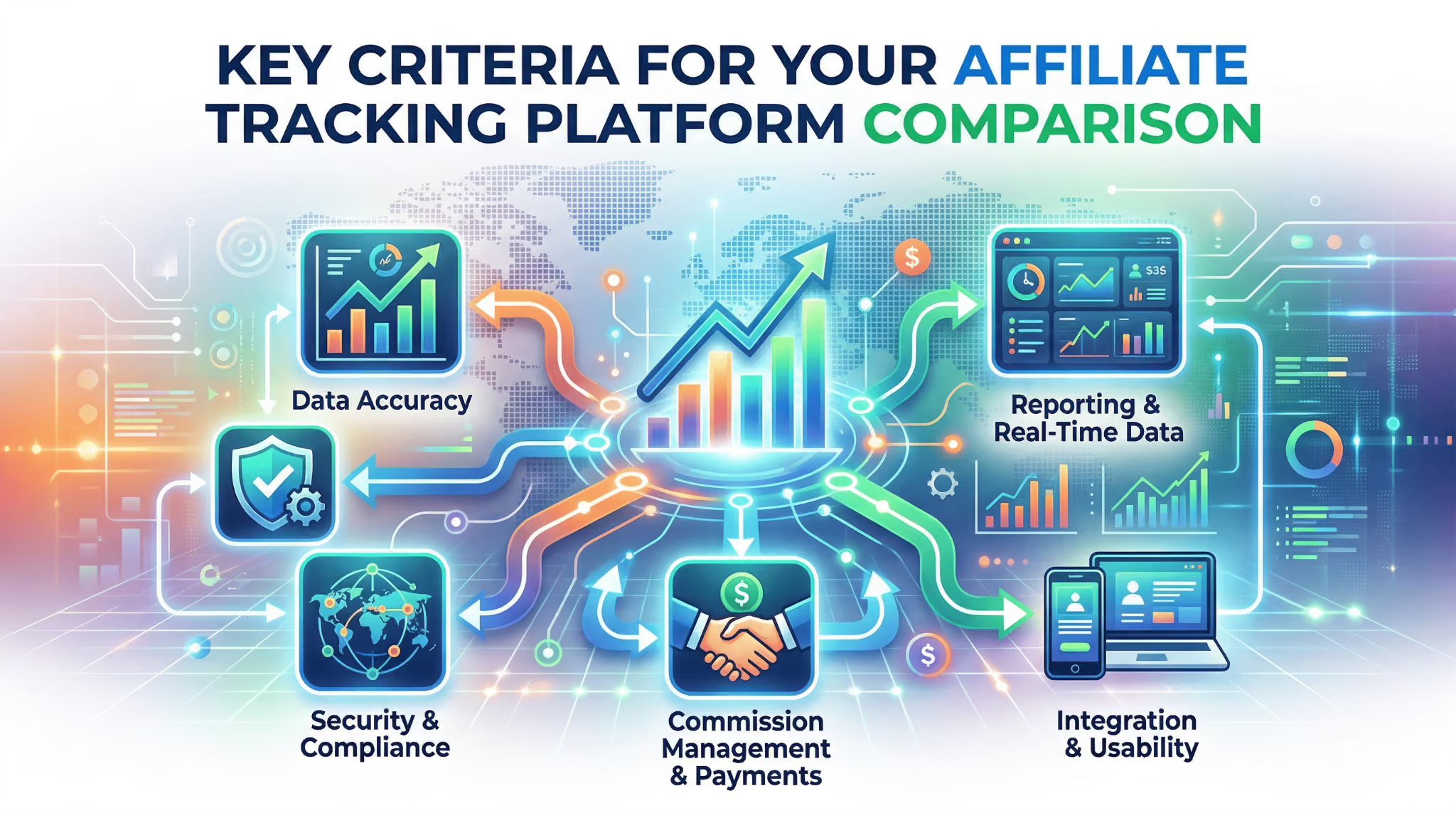
The 10 Key Criteria for Your Affiliate Tracking Platform Comparison
1. Tracking Accuracy and Attribution Method
This is the non-negotiable foundation. How does the platform attribute conversions – server-to-server (S2S) postbacks, pixel tracking, or both? S2S tracking is the gold standard for iGaming because it doesn't rely on cookies or the affiliate's browser environment, making it far more reliable.
Ask specifically: how does the platform handle multi-touch attribution? What happens if a player clicks two different affiliate links before registering? The answer tells you a lot about how fairly your affiliates will be compensated.
2. Commission Model Flexibility
Your affiliate program probably isn't one-size-fits-all – and your platform shouldn't be either. Look for support across:
- CPA (cost per acquisition / flat fee per depositing player)
- RevShare (percentage of net gaming revenue over time)
- Hybrid (a mix of CPA upfront and ongoing RevShare)
- CPL (cost per lead, useful for registration-focused campaigns)
- Tiered structures (higher RevShare as affiliates hit volume targets)
If a platform only handles RevShare and you want to run CPA campaigns for specific brands or regions, you'll hit a wall fast.
3. Multi-Level Network Support
Many iGaming affiliate programs involve sub-affiliates – partners who bring in other partners. A proper affiliate tracking platform should let you build multi-level network structures, assign different commission terms at each level, and track performance across the whole tree without needing a separate system.
If you're planning to grow beyond a flat affiliate list, this feature goes from "nice to have" to essential very quickly.
4. API Access and Integration Depth
Your affiliate platform doesn't live in isolation. It needs to talk to your player management system, your CRM, your payment processor, and possibly your BI tools. Before committing, check:
- Does the platform offer a well-documented public API?
- Can it push data to your internal systems in real time?
- Does it support webhooks for event-driven workflows?
Platforms that are closed ecosystems, where data only lives inside their dashboard, create bottlenecks that slow down every operational decision you make.
5. Fraud Detection and Prevention
Affiliate fraud is a real problem in online casino affiliate marketing. Click flooding, fake registrations, cookie stuffing – there are affiliates who will game the system if you let them. A solid platform should have built-in fraud detection tools, including:
- Automated flagging of suspicious traffic patterns
- IP and device fingerprinting
- Duplicate detection for registrations and deposits
- Manual review workflows for flagged activity
If the platform you're evaluating shrugs at this question, that's a problem.
6. Reporting and Analytics Depth
Affiliate managers live in dashboards. The reporting tools need to be genuinely useful – not just a table of clicks and conversions, but a real analytical layer that lets you slice by traffic source, geo, device, date range, creative, and affiliate tier.
Look for: customisable report views, exportable data (CSV, Excel), scheduled report delivery, and ideally a dashboard your affiliates can access with their own performance data. Affiliates who can monitor their own stats trust the numbers more and need less hand-holding.
7. Multi-Brand and Multi-Property Management
Running more than one casino brand? You need a platform that can manage multiple properties from a single backend – with separate tracking, separate commission structures, and separate affiliate portals if needed – without requiring you to set up entirely separate accounts.
This is especially relevant for operators who manage a portfolio of brands across different jurisdictions. Switching between platforms for each brand is the kind of operational overhead that quietly kills productivity.
8. Payment Processing Capabilities
Commission payments are where affiliate trust is won or lost. Your platform should support:
- Multiple payment methods (bank transfer, e-wallets, crypto where applicable)
- Configurable payment thresholds and cycles
- Automated payment runs to reduce manual admin
- Clear payment history that affiliates can access themselves
Delayed or opaque payments are one of the top reasons affiliates leave programs. A platform that handles this cleanly earns you goodwill you'd otherwise have to spend time rebuilding.
9. Compliance Tools (GDPR, KYC, AML)
iGaming is one of the most heavily regulated industries on the planet, and that regulation increasingly touches affiliate programs too. Your platform should support:
- GDPR-compliant data handling and consent management
- Audit trails for all affiliate transactions and commission adjustments
- Tools to enforce KYC requirements before affiliate payouts
- Role-based access controls so only the right people see sensitive data
If a platform doesn't take compliance seriously, you're inheriting their liability.
10. Support Quality and Onboarding
This one gets underestimated every time. A platform is only as good as the support behind it, and in iGaming – where campaigns run around the clock – you need responsive, knowledgeable help when something goes wrong.
Ask the right questions during evaluation:
- What are the support hours and response time SLAs?
- Is there a dedicated account manager or just a ticket queue?
- What does onboarding look like – and how long does it typically take to go live?
- Are there training resources and documentation for your affiliate managers?
A platform that rushes you through onboarding and disappears afterward is not a partner. It's a vendor.
Red Flags to Watch Out For When Comparing Platforms
Even the best demos can hide problems. Keep an eye out for these warning signs:
- Vague tracking methodology: if they can't explain exactly how attribution works, that's a gap that'll cause disputes later
- No API or limited export options: your data should be yours, fully accessible
- Flat commission structures only: flexibility is non-negotiable as your program grows
- No fraud prevention tools: this isn't optional in iGaming
- Poor affiliate-facing UI: if your affiliates can't use the dashboard easily, they'll blame you for it
- Locked-in contracts with no performance guarantees: always read the exit clauses
- No dedicated onboarding support: a platform that hands you a login and a knowledge base isn't set up for your success
How TheAffiliatePlatform Handles These Criteria

Once you've built your comparison framework, it's worth looking at what a purpose-built iGaming affiliate management solution actually delivers.
TheAffiliatePlatform (Smartico.ai’s sister product), developed by Gamify Tech Ltd., is a SaaS platform built specifically for iGaming operators. It covers every criterion in this list without requiring third-party workarounds.
On tracking, it uses server-to-server postback tracking for reliable, cookie-independent attribution. Commission flexibility is a core feature… Operators can configure CPA, RevShare, Hybrid, and tiered deals, all customisable per affiliate or campaign. Multi-level network building is built in, so managing sub-affiliate tiers doesn't require a workaround.
The platform includes real-time analytics and reporting, API access for integrations, media management tools, and A/B testing for creatives, which is genuinely useful for operators who want to help their affiliates run better campaigns. Payment management and compliance-friendly workflows are also included.
Where it stands out is in the combination of these features in a single platform rather than requiring operators to bolt together multiple tools. If you're at the stage of evaluating options, it's worth booking a demo to see how it handles your specific setup. You can do that with TheAffiliatePlatform.
For a full rundown of TAP’s features, check out this article.
Making Your Final Decision
After running through the criteria, you should have a shortlist of two or three platforms. Here's how to make the final call:
Run a structured pilot if possible (most platforms offer a trial or sandbox environment). Test the tracking accuracy with real traffic. Run a sample payment cycle. Have your affiliate managers spend time in the dashboard. Their feedback matters as much as the feature checklist.
Get your legal and compliance team involved before signing. iGaming contracts with platforms often include data processing agreements and jurisdiction-specific clauses that need review.
And finally, talk to other operators who use the platform. Vendor references are fine, but independent opinions from people running similar programs will tell you things no demo ever will.
FAQ
What's the difference between an affiliate tracking platform and an affiliate network?
An affiliate network is a marketplace where operators and affiliates find each other. An affiliate tracking platform is the software that manages your own affiliate program – tracking conversions, calculating commissions, and handling payments. Most serious iGaming operators run their own program through a dedicated platform rather than relying entirely on networks, which gives them more control over terms, data, and relationships.
How important is server-to-server (S2S) tracking for iGaming affiliate programs?
Very. S2S postback tracking doesn't rely on cookies or JavaScript firing correctly in a browser – it sends conversion data directly from your server to the affiliate platform's server. In iGaming, where players often complete registration on mobile, use ad blockers, or browse across multiple devices, cookie-based tracking misses a meaningful percentage of real conversions. S2S tracking is the standard you should hold any platform to.
Can a small online casino afford a dedicated affiliate tracking platform?
Yes, most modern SaaS affiliate platforms are priced on a tiered model, so smaller operators pay less than enterprise clients. The more relevant question is whether the cost of the platform is offset by the revenue your affiliate program generates. If affiliates are a meaningful acquisition channel for you, even at modest volume, a dedicated platform typically pays for itself in reduced admin time and improved affiliate trust alone.
What metrics should I track to evaluate affiliate program performance?
Start with: conversion rate (clicks to registrations), FTD rate (registrations to first-time depositors), player LTV by affiliate source, and commission-to-revenue ratio. These tell you whether your affiliates are sending high-quality traffic or just volume. Over time, add retention metrics – how long players referred by affiliates stay active – since this directly impacts RevShare costs.
How long does it typically take to migrate to a new affiliate tracking platform?
It varies, but most operators should plan for 4–8 weeks for a proper migration: configuring commission structures, setting up tracking links, testing postbacks, briefing affiliates on the change, and running parallel tracking during the transition to verify accuracy. Platforms with strong onboarding support can compress this timeline. Trying to rush a migration almost always creates tracking gaps that are painful to unwind.
Conclusion
Choosing the right affiliate tracking platform comes down to three things: tracking you can trust, commission flexibility that matches how your program actually works, and a support team that treats you like a partner. Use the 10 criteria in this guide as your evaluation framework, and don't let a polished demo distract you from asking the hard questions. If you want to see how a purpose-built iGaming affiliate platform handles the full checklist, book a demo with TheAffiliatePlatform (TAP) and run it through its paces yourself.
Did you find this article helpful? If so, consider sharing it with other industry professionals such as yourself.
Related Guides:
Need help?
Lets have a chat!
Lets have a chat!
We're here to help you understand how our platform can meet your needs. Schedule a meeting with us, and let's explore how we can drive your success together.
Book a meeting
