
.avif)
Here's a scenario that plays out more often than it should: an affiliate sends solid traffic, a player converts, but the commission never fires. Nobody knows why. The affiliate is frustrated, you're losing a relationship, and the root cause is a tracking setup nobody audited properly.
Affiliate tracking is the plumbing of any affiliate program. When it works, you don't notice it. When it doesn't, everything downstream breaks, including payments, trust, data, decisions. This guide walks through the ins and outs of affiliate tracking, what separates server-side from pixel-based methods, when to use each, and what operators running iGaming programs should set up from day one. Check it out..
What Is Affiliate Tracking, and Why Does It Matter?

At its core, affiliate tracking is the system that connects a player's action (clicking a link, registering, depositing) back to the affiliate who sent them. Without it, you can't pay the right people, you can't measure what's working, and you can't make smart decisions about where to spend your affiliate budget.
The technical mechanism varies by method, but the basic chain looks like this:
- A user clicks an affiliate's link, which contains a unique identifier (usually called a click ID or token)
- That identifier gets stored somewhere, either in a browser cookie or passed server-to-server
- When the user converts, the tracking system fires a signal back to the affiliate platform
- The platform matches the conversion to the original click and credits the affiliate
Simple in theory. The complexity comes in how step three actually happens, and that's where pixel tracking, postback URLs, and S2S integrations each take a very different approach.
The Three Main Affiliate Tracking Methods
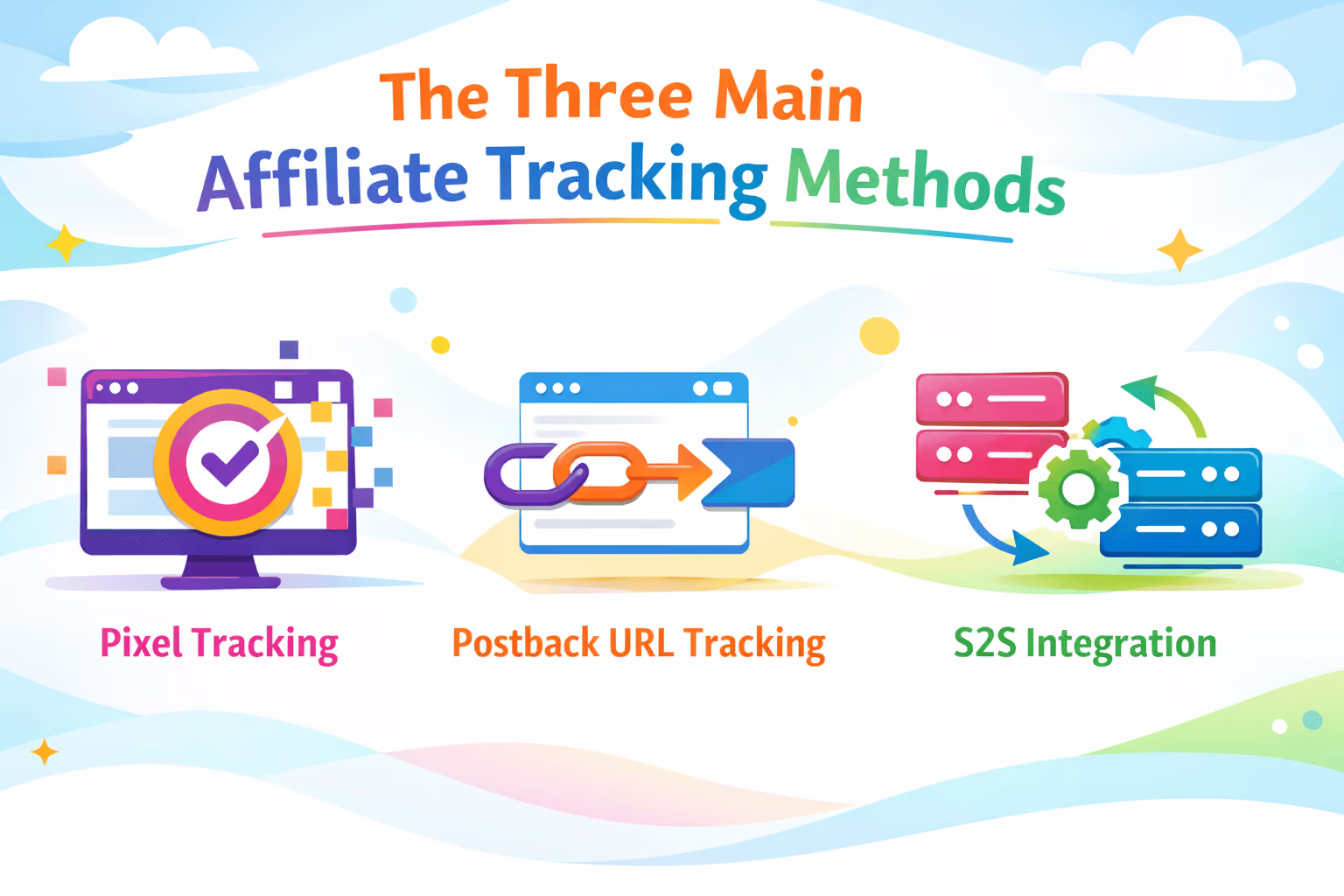
Pixel Tracking
Pixel tracking is the oldest method and still the most common in general affiliate marketing outside of iGaming. You embed a small piece of code (the "pixel") on your thank-you page or conversion confirmation screen. When a user loads that page, the pixel fires and sends a signal back to the tracking platform.
It's straightforward to set up and works without any server involvement on your end. The problem is that it depends entirely on the browser. Ad blockers, iOS privacy changes, and browser-level cookie restrictions all interfere with pixel fires. In regulated markets where players are privacy-conscious and ad blockers are widespread, you can lose a meaningful percentage of conversion signals before they ever register.
For iGaming operators, pixel tracking alone is generally considered unreliable for anything beyond top-of-funnel awareness metrics. Deposit confirmations and revenue events need something more robust.
Postback URL Tracking (Server-to-Server Basics)
A postback URL (sсometimes called a callback URL) flips the model. Instead of firing a pixel in the user's browser, your platform sends an HTTP request directly from your server to the affiliate platform's server when a conversion happens.
No browser involved. No cookies. No ad blockers in the way.
The affiliate platform gives you a postback URL with placeholder parameters. When a qualifying event fires on your side (first deposit, registration, whatever you've defined), your system calls that URL with the real values substituted in - player ID, conversion value, transaction reference. The affiliate platform receives it, logs the conversion, and attributes it to the right affiliate.
This is why postback tracking is the standard in performance marketing for anything involving real transactions. The Interactive Advertising Bureau's technical standards have long recognised server-to-server attribution as the more reliable method for conversion tracking in environments where browser-based signals are degraded.
S2S Integration (Full Server-to-Server)
S2S (server-to-server) is essentially the mature, structured version of postback tracking. Rather than a single callback URL firing on one event, S2S integration connects your platform directly to the affiliate tracking system through an API layer, enabling continuous, bidirectional data exchange.
With a proper S2S integration, your affiliate tracking platform doesn't just receive a signal that a conversion happened. It can receive NGR updates, player activity data, multi-event tracking across a player's lifetime, and structured data feeds that power real-time reporting dashboards.
For iGaming operators running RevShare or hybrid commission models, where you need ongoing, accurate revenue attribution month after month, S2S is the architecture that makes that possible cleanly. A postback covers a moment in time; S2S covers a relationship.
Pixel vs Postback vs S2S: How They Compare
How to Set Up Postback Tracking Correctly: 6 Steps
This is where operators most often go wrong. Setting up the postback URL is step one… Getting it working reliably is the rest of it.
- Get your postback URL from the affiliate platform. It'll look something like https://tracking.yourplatform.com/postback?click_id={click_id}&event=deposit&value={value}. The parts in curly braces are placeholders your system replaces with real values.
- Store the click ID on arrival. When a user arrives via an affiliate link, the click ID in the URL parameter needs to be captured and stored against that user session in your database. If it gets lost before the conversion, the postback has nothing to match against.
- Map your conversion events. Decide exactly which actions trigger a postback - registration, first deposit, qualifying deposit above a threshold. Each event type may need a separate postback URL or a different event parameter.
- Substitute values server-side. When the conversion fires, your system populates the postback URL with the real click ID, the event type, and the transaction value. This happens on your server, not in the browser.
- Test with a staging environment before going live. Fire test conversions and verify the affiliate platform is receiving and logging them correctly. Most platforms have a conversion log or debug view that shows incoming postback calls.
- Monitor for gaps. Periodically compare your internal conversion data against what the affiliate platform has recorded. Unexplained gaps usually point to click IDs being dropped, postback URL misconfigurations, or server timeout issues.
Common Affiliate Tracking Mistakes That Cost Operators Money
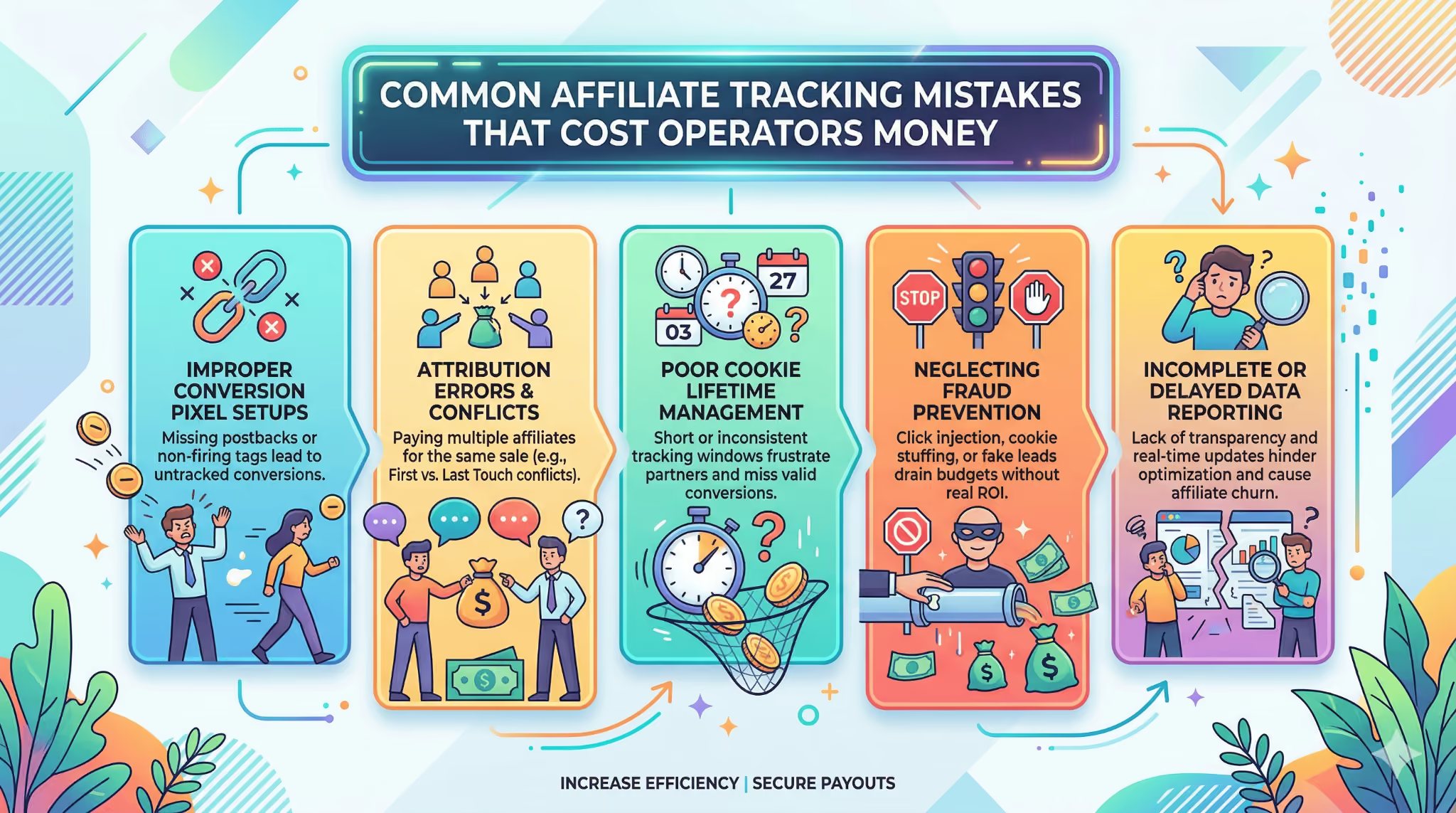
The following mess ups come up regularly, especially in programs that have grown quickly without a proper technical audit:
- Not storing the click ID persistently. If your session storage clears before the conversion, you lose attribution. Store click IDs at the database level against the user record, not just in the session.
- Using pixel tracking for deposit events. Deposit confirmation pages are exactly where ad blockers and browser privacy settings hit hardest. Any real transaction event should fire server-side.
- Mismatched event definitions. The affiliate was told they earn on first deposit. Your postback fires on registration. The numbers never reconcile and disputes follow. Define events precisely in writing before any deal goes live.
- No redundancy on postback failures. If your server fires a postback and the receiving end times out, do you retry? Some operators don't have a retry mechanism, which means failed calls just disappear.
- Relying on last-click attribution without thinking it through. Last-click is the default in most platforms, but it doesn't always tell the right story. A player who clicks an affiliate link, bounces, then returns via Google and converts. Who gets credit? Know your attribution model and make sure affiliates understand it too.
- Skipping the integration test when switching platforms. Moving to a new affiliate tracking platform without revalidating every postback integration is one of the most common causes of tracking blackouts. Always run parallel tracking during a migration window.
How TheAffiliatePlatform Handles Tracking for iGaming Operators

Clean tracking architecture is one of those things that's hard to appreciate until it breaks. TheAffiliatePlatform, Smartico.ai’s sister product, was designed specifically for the complexity that iGaming affiliate programs run into, which is a different set of problems than a generic SaaS affiliate tool is built to handle.
The real-time tracking and analytics layer means conversion data doesn't sit in a queue waiting for an overnight batch process. Affiliates see their stats live, which reduces the volume of "why don't my numbers match?" queries landing in your support queue. That alone saves meaningful time at scale.
For operators running RevShare or hybrid deals, the S2S integration and API access lets you push ongoing revenue data into the platform continuously, not just first-event postbacks. The platform handles multi-level affiliate network structures, so if you're running sub-affiliates or tiered commission arrangements, the attribution logic carries through correctly at each level.
The affiliate real-time reporting dashboard gives operators a live view of traffic, conversions, and revenue by affiliate, campaign, or channel, without exporting spreadsheets or waiting on manual reports.
If your current setup requires manual reconciliation between your internal data and what affiliates are seeing, that's a sign your tracking infrastructure needs attention. Book a demo with TheAffiliatePlatform to see how a purpose-built iGaming affiliate platform manages it.
Affiliate Tracking in 2026: What's Changing
The tracking landscape has shifted significantly over the last two years and it hasn't finished moving yet.
Cookieless tracking is no longer a future concern, but a present reality. With third-party cookies deprecated in Chrome for a growing percentage of users and Apple's privacy changes having already reshaped mobile attribution, browser-based tracking methods are losing reliability across the board. The industry response has been a faster shift toward server-side and S2S methods as the default, not the premium option.
AI-driven anomaly detection is starting to appear in more capable affiliate tracking platforms. Rather than manually reviewing traffic patterns for fraud signals, some platforms now flag unusual patterns (sudden deposit velocity spikes, abnormal geographic clusters, abnormal conversion rates from specific affiliate sources) automatically. Fraud prevention in affiliate programs remains a significant operational cost for operators who don't have adequate detection in place.
First-party data integration is becoming a competitive advantage. Operators who can feed enriched first-party signals into their affiliate tracking (player quality scores, predicted LTV, engagement metrics) are making better decisions about which affiliate relationships to invest in. That requires tracking infrastructure capable of handling structured data at the API level, not just binary conversion events.
FAQ
What's the difference between a postback URL and a pixel in affiliate tracking?
A pixel fires in the user's browser when they load a conversion page. It depends on the browser working correctly and isn't blocked by privacy tools. A postback URL fires from your server directly to the affiliate platform's server, with no browser involved. For real-money transactions like deposits, postback tracking is significantly more reliable because it bypasses the browser environment entirely.
Why does S2S integration matter for iGaming affiliate programs specifically?
iGaming programs often run RevShare deals where affiliates earn a percentage of ongoing player revenue, not just a one-time commission. That requires continuous, accurate revenue attribution over months or years. S2S integration connects your platform and the affiliate system through an API, enabling ongoing data exchange rather than a single conversion event signal. Without it, RevShare calculations rely on manual data exports or batch reconciliations, which create errors and disputes.
How do I know if my affiliate tracking is losing conversions?
Compare your internal conversion records against what the affiliate platform has logged for the same period. If your database shows 200 qualifying deposits but the affiliate platform logged 165, you have a 17.5% attribution gap. Common causes are click IDs not being stored correctly, postback URLs misconfigured with wrong parameters, server timeout failures with no retry logic, or pixel tracking being used for events that should fire server-side.
Can affiliate tracking work without cookies in 2026?
Yes, server-to-server and postback tracking don't rely on cookies at all. The click ID gets passed through the URL on the initial click, stored in your database against the user record, and sent back via the postback when a conversion fires. The entire attribution chain happens at the server level. This is one reason S2S and postback methods have become the standard for performance-based programs, especially in regulated markets where user privacy settings are more conservative. Google's own guidance on privacy-preserving attribution is a useful reference on where browser-based tracking is heading.
What should I check when my affiliate tracking stops working after a platform migration?
Start with the postback URL configuration. The new platform will almost certainly use different URL structures and parameter names than your previous one. Verify that click IDs are being passed and stored correctly on arrival, that each conversion event is mapped to the right postback endpoint, and that your server is successfully calling the new URLs (check your server logs for response codes). Run test conversions before going live and don't decommission the old tracking until you've confirmed the new setup is logging correctly.
Conclusion
Affiliate tracking sounds technical, and parts of it are. But the core principle is simple: every commission you pay needs a clean, verified attribution chain behind it. Pixel tracking is not reliable enough for real-money events. Postback URLs solve the browser problem. S2S integration solves the ongoing attribution problem that RevShare and hybrid programs depend on.
Get the tracking right and everything else like reporting, payments, and affiliate relationships becomes much easier to manage. If you want to see how a purpose-built iGaming affiliate tracking platform handles all of this, book a demo with TheAffiliatePlatform.
Related Guides:
"choosing a tracking platform" → https://www.theaffiliateplatform.com/en/post/en-post-affiliate-tracking-platform-comparison
Need help?
Lets have a chat!
Lets have a chat!
We're here to help you understand how our platform can meet your needs. Schedule a meeting with us, and let's explore how we can drive your success together.
Book a meeting
