
.png)
If you're running an iGaming operation and shopping for a white label affiliate platform, you've probably noticed that not all solutions are built the same. Some hand you the keys to an entire codebase. Others give you a login and let you get to work in minutes. The difference between those two approaches matters more than most comparison guides let on.
This article breaks down white-label and SaaS affiliate platforms side by side. We'll cover what each model actually means in practice, where the real costs hide, the features that separate a good affiliate management platform from a frustrating one, and how to figure out which path fits your operation. Whether you're launching your first online casino affiliate marketing programme or rebuilding an existing one, this should save you a few headaches.
What Does "White-Label" Mean for Affiliate Software?
The term gets thrown around loosely, so let's nail it down.
A white-label affiliate platform is software built by a third party that you rebrand and deploy as your own. You typically get access to the source code (or a dedicated instance), slap your logo on it, point it at your domain, and present it to affiliates as a proprietary system. From the outside, it looks like something your team built in-house.
How It Works in Practice
You're licensing the technology. The vendor provides the platform's core engine, and you handle hosting, customisation, and often maintenance. Think of it like buying a franchise restaurant: the recipes exist, but you're responsible for the kitchen, the staff, and the rent.
Some white-label providers include managed hosting as part of their package, which blurs the line with SaaS. But the key distinction stays the same: you own the branding, and in many cases, you control the infrastructure.
Who Goes White-Label?
Operators who choose white-label affiliate software usually have a few things in common. They want full brand control over the affiliate-facing experience. They have an in-house dev team (or budget for one) that can handle integrations and ongoing tweaks. And they often operate in multiple markets where having a platform that looks and feels "theirs" carries strategic weight.
What Is a SaaS Affiliate Platform?
SaaS stands for Software as a Service, and in the affiliate world, it means you're subscribing to a hosted platform that the provider builds, maintains, and updates for you. You don't touch the infrastructure. You don't manage servers. You configure the platform, onboard your affiliates, and focus on growing your programme.
How It Works in Practice
You sign up, configure your commission structures, connect your tracking, and start managing affiliates through a web-based dashboard. The provider handles uptime, security patches, feature releases, and compliance updates. It's closer to renting a fully serviced office than building your own.
Most modern iGaming affiliate platforms fall into this category, and for good reason. The SaaS model lets operators move fast without stacking up DevOps overhead.
Who Goes SaaS?
Operators who want to launch quickly, keep their team lean, and avoid large upfront capital spend. SaaS also tends to attract companies that value predictable monthly costs over the flexibility of deep customisation. If you want to be running affiliate campaigns within days rather than months, SaaS is probably where you'll land.
Head-to-Head: White-Label vs SaaS Affiliate Platforms
Here's where it gets practical. Let's compare the two models across the dimensions that actually matter when you're making this decision.
Neither model is objectively better. The right call depends on your team, your budget, your growth stage, and how much control you actually need versus how much you think you need. That last part trips up more operators than you'd expect.
7 Features to Prioritize in Any Affiliate Platform (White-Label or SaaS)
Regardless of which deployment model you choose, the affiliate software itself needs to do certain things well. Here are seven features worth putting at the top of your checklist:
- Real-time tracking and reporting. If your data is delayed by even a few hours, you're flying blind. Affiliates expect live dashboards, and your team needs real-time insights to optimize campaigns on the fly. According to Google's own guidance on page experience, speed and responsiveness matter across the board, and that logic extends to the tools you use internally.
- Flexible commission structures. CPA, revenue share, hybrid deals, tiered payouts, sub-affiliate commissions. Your platform should handle all of these without requiring a developer to hard-code every new arrangement.
- Multi-brand and multi-market support. If you operate more than one brand or target multiple geographies, your affiliate management platform needs to keep those programmes cleanly separated while letting you manage them from one place.
- Fraud detection and prevention. Click fraud, fake registrations, and self-referrals eat into margins fast. The European Gaming & Betting Association (EGBA) has repeatedly flagged affiliate fraud as a growing concern. Your platform should have automated flags and manual review tools built in.
- Payment automation. Manually processing affiliate payouts once a month might work when you have ten partners. At 500? You need automated calculations, approval workflows, and multi-currency support.
- API access and integration flexibility. Your affiliate platform doesn't exist in a vacuum. It needs to talk to your CRM, your BI tools, your player management system, and possibly third-party analytics. A solid API is non-negotiable.
- Onboarding and media tools. Giving affiliates access to banners, landing pages, tracking links, and A/B testing tools means they can promote your brands more effectively. That's less work for your marketing team and better results across the board.
The Real Cost Conversation: Where Money Hides

The sticker price on either model tells you about half the story. Here's where operators frequently underestimate spending.
White-Label Hidden Costs
- Hosting and infrastructure. You're paying for servers, CDN, load balancing, and redundancy. These costs scale with traffic, and during peak periods (think major sporting events or seasonal promotions), they can spike.
- Developer time. Every customisation, integration, and bug fix comes out of your team's bandwidth. If you don't have in-house devs, you're hiring contractors, and iGaming-experienced developers aren't cheap.
- Security and compliance. GDPR enforcement actions have hit the iGaming sector hard. With a white-label setup, ensuring your affiliate platform meets data protection requirements falls squarely on you.
- Update lag. When the provider releases new features, you need to merge those updates into your customised version. That process can be slow and painful, especially if your code has diverged significantly.
SaaS Hidden Costs
- Scaling fees. Some SaaS providers charge based on the number of affiliates, clicks tracked, or revenue processed. Growth can quietly push you into higher pricing tiers.
- Customisation limits. If your programme has unusual requirements, you might hit walls. Workarounds often mean paying for custom development on the provider's side.
- Switching costs. Migrating away from a SaaS platform means exporting data, rebuilding integrations, and retraining your team. That lock-in isn't always obvious at signup.
Common Mistakes When Choosing an Affiliate Platform
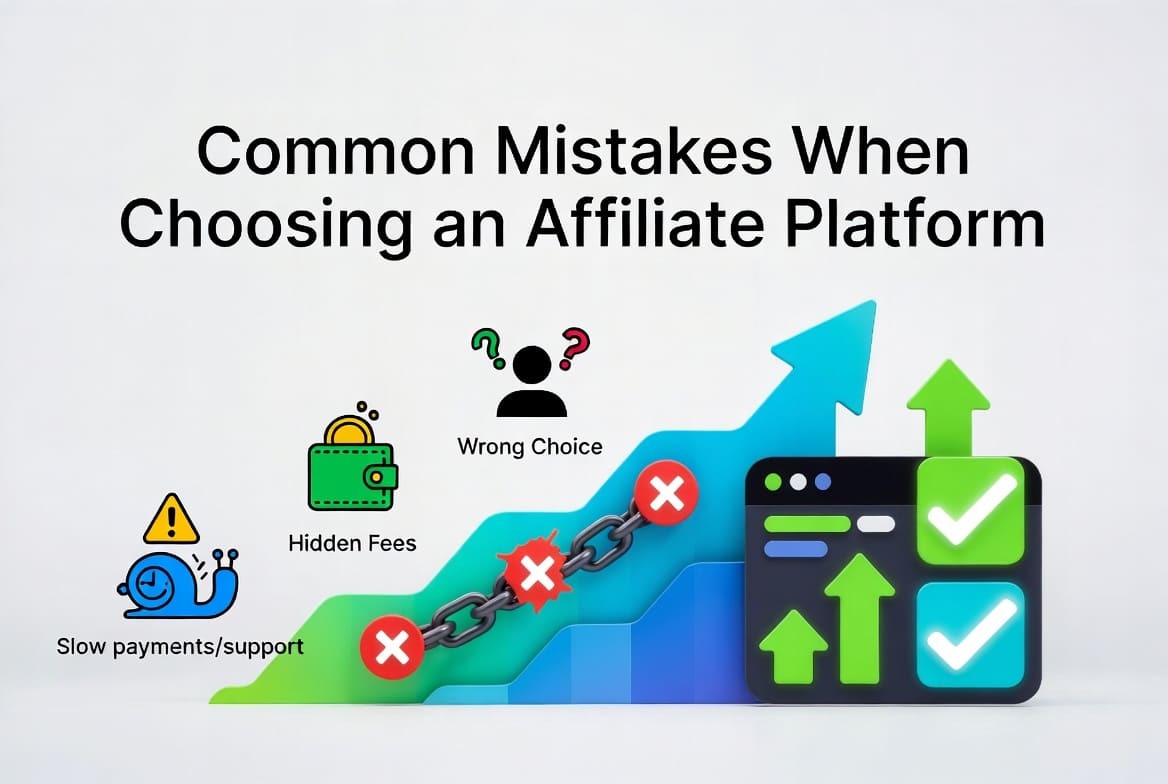
This is the section most comparison guides skip. Don't be the operator who learns these the hard way.
- Over-engineering from day one. Choosing a white label affiliate platform because "we might need deep customisation later" is one of the most expensive hypotheticals in iGaming. Start with what you need now. You can always migrate.
- Ignoring your affiliates' experience. You're not the only user of this platform. Your affiliates log into it daily. If the interface is clunky or the reporting is confusing, your best partners will quietly move to programmes with better tools.
- Treating compliance as an afterthought. The UK Gambling Commission and other regulators increasingly scrutinise affiliate relationships. Your platform needs audit trails, consent management, and approval workflows baked in.
- Skipping the integration audit. Before you commit, map out every system your affiliate platform needs to connect to. Then verify that those integrations are supported, documented, and tested. "We can build that" is a phrase that has cost the iGaming industry millions.
- Not asking about support. When something breaks at 2 AM on a Saturday during a peak promotion, who picks up the phone? Dedicated account management and responsive technical support separate good providers from frustrating ones.
How TheAffiliatePlatform Fits Into This Picture
If you've been reading this thinking "I want SaaS flexibility with real depth," TheAffiliatePlatform is worth a look. Built by the founders of Smartico.ai specifically for iGaming operators, it's a SaaS affiliate management platform designed to handle the complexity of online casino affiliate marketing without forcing you to maintain your own infrastructure.
The platform covers the features we listed above: real-time tracking and analytics, flexible deal structures (CPA, rev share, hybrid, and custom arrangements), multi-level affiliate network building, and full API access for integrations. On top of that, it includes media management tools with A/B testing so your affiliates can run smarter campaigns, plus built-in payment management to streamline payouts across currencies.
What stands out for most operators is the combination of quick setup and ongoing support. You're not left to figure things out alone. Dedicated account managers and technical support come standard, which means your team can focus on growing the affiliate programme instead of troubleshooting platform issues.
Curious whether it's the right fit? Book a demo with TheAffiliatePlatform and walk through the platform with their team.
Making the Decision: A Practical Framework
Still unsure? Run through these questions honestly:
Choose white-label if: You have an experienced dev team, your brand identity requires a fully proprietary look and feel, you operate in highly regulated markets where you need infrastructure-level control, and your budget accounts for ongoing maintenance and security.
Choose SaaS if: You want to launch quickly, prefer predictable monthly costs, don't want to manage servers or worry about updates, and you'd rather invest your team's energy in affiliate relationships than platform upkeep.
And here's a nuance most guides miss: the "hybrid" approach. Some operators start on SaaS to get up and running fast, then evaluate whether white-label makes sense once their programme hits a certain scale. There's no rule that says you have to pick one model forever.
The online gambling market continues to grow at roughly 8-10% annually, and affiliate marketing remains one of the most cost-efficient acquisition channels. Whichever model you choose, the important thing is choosing a platform that can grow with you.
2026 Trends Worth Watching
The affiliate software landscape is shifting. A few trends that should influence your decision:
Cookieless tracking. With Google phasing out third-party cookies in Chrome, affiliate platforms need server-side tracking and first-party data solutions. Ask any provider you're evaluating how they handle attribution in a cookieless world.
AI-driven insights. Predictive analytics, automated fraud detection, and smart commission optimization are showing up in more platforms. These features are easier to deploy and iterate on in a SaaS model, where the provider can roll updates to all clients simultaneously.
Regulatory pressure. From the EU's Digital Services Act to tightening iGaming affiliate software regulations in markets like the UK and Germany, compliance tooling is becoming a differentiator. Platforms that bake compliance into their core (rather than bolt it on) will have a real edge.
FAQ
What is the main difference between a white-label and a SaaS affiliate platform?
A white-label affiliate platform gives you a rebranded version of the software to host and manage yourself, while a SaaS platform is hosted and maintained by the provider. White-label offers deeper customisation and brand control, but requires more technical resources. SaaS prioritises speed, lower upfront costs, and hands-off maintenance. The right choice depends on your team's capabilities and how much infrastructure you're willing to manage.
How much does a white label affiliate platform typically cost?
Pricing varies widely. White-label licensing fees can range from a few thousand to tens of thousands per month, plus hosting, developer time, and security costs. SaaS platforms typically charge a monthly subscription that includes hosting, updates, and support. Total cost of ownership for white-label is almost always higher when you factor in the full picture. Always request a detailed cost breakdown before committing.
Can I switch from a SaaS affiliate platform to a white-label solution later?
Yes, but it requires planning. You'll need to export affiliate data, historical reporting, and commission structures, then rebuild integrations with your existing systems. The migration timeline depends on how complex your programme is. Some operators start with SaaS to validate their affiliate strategy, then move to white-label once they've confirmed the investment is justified by scale and specific customisation needs.
What affiliate platform features matter most for online casino operators?
For online casino affiliate marketing, the essentials include real-time reporting, flexible commission models (CPA, revenue share, hybrid), fraud detection, multi-brand support, and strong compliance tooling. Payment automation and API access for integrating with your player management system are also critical. The ability to offer affiliates quality creative assets and tracking tools directly through the platform helps attract and retain top-performing partners.
Is a SaaS affiliate platform secure enough for iGaming operations?
Reputable SaaS providers invest heavily in security, often exceeding what a single operator could achieve independently. Look for providers that offer encryption, role-based access controls, regular security audits, and compliance with data protection regulations like GDPR. The key question isn't whether SaaS is secure in general, but whether your specific provider meets the regulatory requirements of the markets you operate in.
To Summarize…
Choosing between a white label affiliate platform and a SaaS solution comes down to three things: how much control you truly need, what resources you can commit, and how quickly you want to be operational. For most iGaming operators, especially those building or scaling a programme, SaaS delivers the faster path with fewer operational headaches. If you're ready to see what a purpose-built iGaming affiliate platform looks like in action, book a demo with TheAffiliatePlatform and find out whether it fits your setup.
If you’ve found this article helpful, consider sharing it with your friends and colleagues.
Need help?
Lets have a chat!
Lets have a chat!
We're here to help you understand how our platform can meet your needs. Schedule a meeting with us, and let's explore how we can drive your success together.
Book a meeting
