
.avif)
Let’s say an iGaming operator signs a deal with a high-volume affiliate, traffic flows in, and the numbers look pretty good for weeks. Then, during a routine review, someone notices the players from that source are churning within 48 hours and claiming every bonus available. The affiliate has already been paid.
That's what happens when your reporting isn't working in real time.
A proper affiliate tracking platform makes sure your data is fast enough, deep enough, and actionable enough to actually grow your programme. This guide covers everything from what real-time reporting actually means, to the features that matter most, to how to turn raw data into smarter decisions. Let's get into it.
Real-Time Affiliate Reporting Explained

"Real-time" is one of those phrases that gets stretched until it loses meaning. Some affiliate platforms label themselves real-time while delivering data that refreshes every few hours. Others genuinely show you live dashboards where clicks, registrations, and deposits appear as they happen.
The difference matters more than marketing copy lets on.
Real-Time vs. Delayed Reporting
Delayed reporting creates blind spots. If a campaign starts underperforming at 10am and your data doesn't update until 4pm, you've spent six hours on a problem you couldn't see. For online casino affiliate marketing, where player acquisition costs are high and competition is intense, that kind of lag is expensive.
Real-time affiliate reporting gives you continuous visibility into what your affiliates are sending, how that traffic is converting, and what it's worth. When something shifts, you see it fast enough to respond.
What a Full-Funnel Reporting View Covers
Most operators focus on top-of-funnel data: clicks and sign-ups. But a genuinely useful affiliate platform shows you the complete picture:
- Clicks, impressions, and unique visitors by affiliate, campaign, and traffic source
- Registrations and first-time deposits (FTDs) with timestamps
- Net gaming revenue (NGR) and player lifetime value (LTV) at the affiliate level
- Bonus costs and free play redemptions
- Fraud signals: unusual click-to-registration ratios, flagged IP ranges, rapid sequential deposits
If your current setup only shows the first two rows of that list, you're missing the data that tells you whether an affiliate is actually profitable to your business, not just active.
Why This Is a Bigger Deal in iGaming Than Most Verticals

iGaming affiliate marketing operates under different pressures than most industries. The affiliate marketing space as a whole is growing rapidly, but in iGaming specifically, player quality varies dramatically between traffic sources, regulatory requirements affect what you can track, and commission structures (revenue share, CPA, hybrid) all depend on accurate, up-to-date data.
Tracking inconsistencies and attribution disputes are among the most common friction points between affiliates and programmes. When your reporting data and your payment records don't match, you end up in disputes that damage affiliate relationships and create administrative headaches.
There's also a compliance dimension. Depending on your licensing jurisdiction, you may be required to demonstrate that you're monitoring traffic quality and acting on suspicious patterns. Reliable affiliate real-time reporting isn't just a commercial advantage; it's part of running a responsible programme.
7 Must-Have Features in an Affiliate Tracking Platform
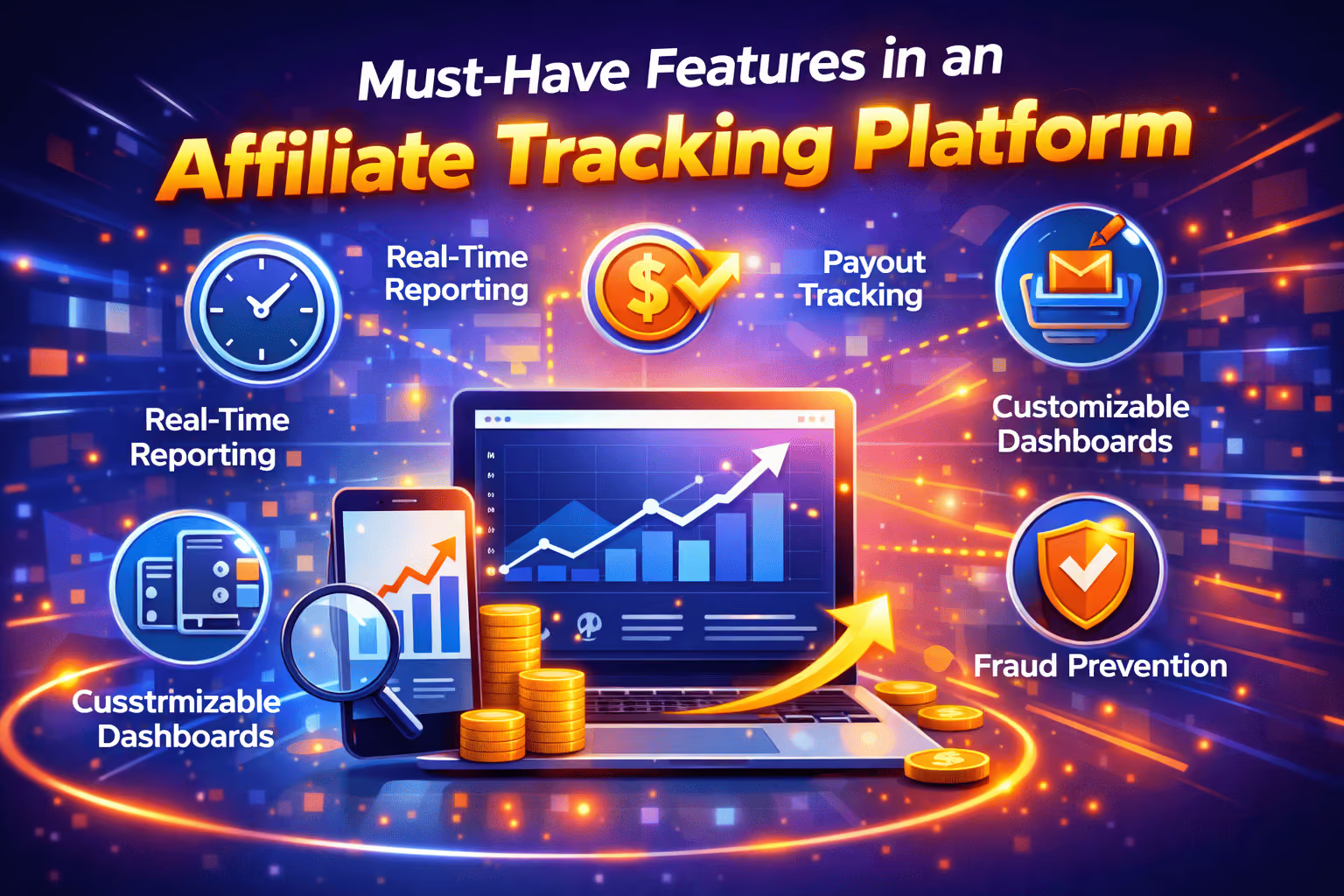
When you're doing a proper affiliate tracking platform comparison, it's easy to get distracted by dashboards and demos. Focus on functionality instead.
1. Live Reporting with Granular Filtering
You need to filter by affiliate, campaign, geo, device type, and date range at any moment. If you have to export a spreadsheet to answer a basic performance question, the platform isn't built for operators who need to move fast.
2. Multi-Touch Attribution Support
Players rarely convert on the first visit. A capable affiliate tracking platform should support multiple attribution models: first click, last click, and multi-touch. Getting attribution wrong means you'll undervalue affiliates who assist conversions and overpay for those who just close them.
3. Flexible Commission Structures
CPA, revenue share, hybrid, tiered deals based on volume or player quality. Your platform should handle all of these, per affiliate, without your team managing it manually in spreadsheets. Flexible commissioning is a hallmark of mature programmes.
4. API Access and Postback Support
If you're running a CRM, a player management system, or any kind of custom reporting stack, your affiliate platform needs to integrate with it. Postback URLs and a well-documented API are non-negotiable at any serious scale.
5. Traffic Quality and Fraud Detection
Not all clicks are genuine. Your platform should flag behavioural patterns that indicate fraudulent or low-quality traffic: abnormal click-to-FTD ratios, multiple accounts from the same device fingerprint, aggressive bonus-claiming within hours of registration. Ad fraud costs the industry billions annually, and affiliate channels are not immune.
6. Affiliate Self-Serve Reporting Portal
Your affiliates need data too. A dedicated portal where they can track their own performance in real time reduces inbound queries, builds trust, and keeps your relationships professional. Affiliates who can see their own numbers optimize better.
7. White-Label and Multi-Brand Support
If you're managing multiple brands or want to run a sub-affiliate network, white-label functionality is essential. It keeps the experience consistent and protects your brand identity across the programme.
How to Turn Affiliate Reporting Data Into Actual Decisions

Real-time data is only as useful as the decisions it drives. Here's a practical approach that works at programme level.
Establish Baselines Before You Analyse
Before comparing affiliates against each other, define what good performance looks like for your programme. What's your target CPA? What player LTV do you expect in the first 90 days? What churn rate triggers a review? Without those benchmarks, you're looking at numbers without context.
Segment Affiliates by Quality, Not Just Volume
Volume rankings are the most common way programmes evaluate affiliates. They're also the most misleading. Create quality-based segments instead:
- High performers: Strong volume and high LTV players. Prioritise with better deals and fast support.
- Developing affiliates: Moderate volume, average LTV. Worth investing in with better creative assets and regular contact.
- High volume, low quality: These affiliates send traffic but the player value isn't there. Time for a deal restructure or a deeper look at their sources.
- Dormant affiliates: Signed up, never converted. A re-engagement campaign occasionally moves these.
That segmentation tells you where to spend your programme management time and where to restructure terms.
Use A/B Testing to Improve Performance from the Same Traffic
If your affiliate platform includes media tools and A/B testing, run it. Testing landing page variations, banner formats, and call-to-action copy can shift conversion rates meaningfully from the same traffic volume. Over months, that compounds. Familiarize yourself with how real-time affiliate tracking with A/B tools can improve creative performance across your programme.
Build a Reporting Rhythm
Real-time access doesn't mean constant monitoring. Set a structure: daily checks on spend, FTDs, and fraud flags; weekly affiliate performance reviews; monthly deep dives into LTV cohorts and programme ROI. That rhythm gives your team clear windows to act on what the data shows.
Common Reporting Mistakes That Cost Operators Money
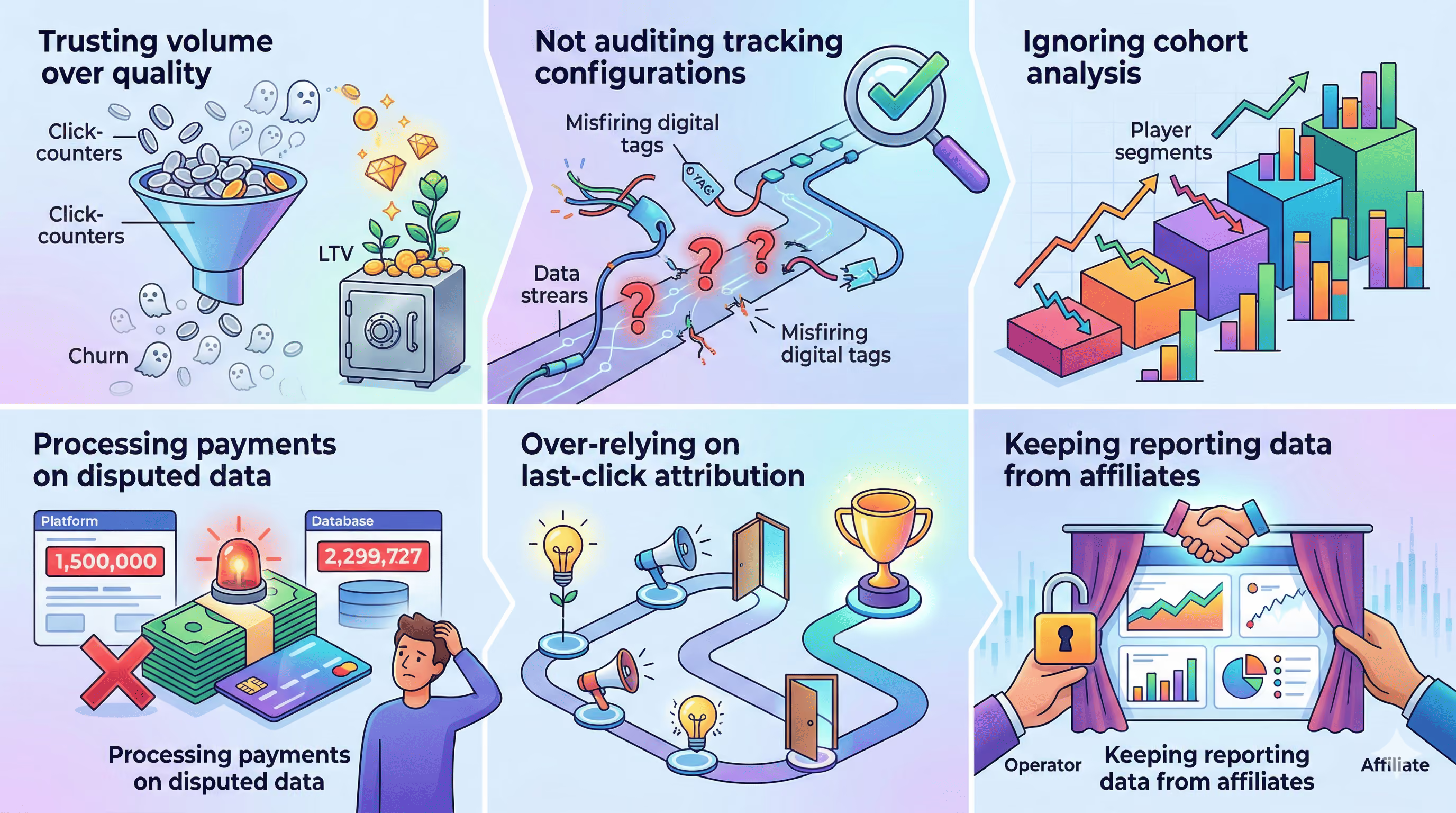
Even operators with capable platforms make avoidable errors. These are the ones that show up most often:
- Trusting volume over quality. High click counts from an affiliate mean nothing if their players churn fast. Always review LTV alongside top-of-funnel metrics.
- Not auditing tracking configurations. Postback setups break. Tags misfire. A quarterly tracking audit catches data integrity problems before they distort your reports and your payments.
- Ignoring cohort analysis. Players acquired in different months behave differently. Cohort data shows whether your affiliate mix is improving or degrading over time.
- Processing payments on disputed data. If your affiliate platform figures don't match your player database, investigate before paying. Disputed commissions are expensive to resolve and damage affiliate trust.
- Over-relying on last-click attribution. Affiliates who assist conversions without closing them often get zero credit under last-click models. You might be cutting valuable partners based on incomplete data.
- Keeping reporting data from affiliates. Transparency builds better working relationships and encourages affiliates to self-optimise. There's no good reason to restrict access to performance data.
How TheAffiliatePlatform Handles This

If your current affiliate tracking platform comparison has brought you to a decision point, TheAffiliatePlatform is worth serious consideration for iGaming operators.
Built by the guys from Smartico.ai, it's a SaaS affiliate management solution developed specifically for the iGaming space. That matters because generic affiliate platforms weren't designed with NGR-based revenue share, compliance-aware tracking, or multi-brand iGaming structures in mind. TheAffiliatePlatform was.
The platform includes genuinely real-time tracking and analytics, so you're working with live data rather than waiting on refresh cycles. Custom deal structures cover CPA, revenue share, hybrid, and tiered commissions, all manageable per affiliate without manual workarounds. API access connects the platform to your existing player management or CRM setup.
There's also a built-in media toolkit with A/B testing capabilities, so your affiliates can test and optimise their own campaigns rather than queueing up requests to your team. For programmes that want to scale horizontally, the multi-level affiliate network building feature supports sub-affiliate structures from within the same platform.
Payment management and dedicated support from a team that understands iGaming round out the package. When a problem comes up, you're talking to people who know the vertical.
Ready to see what your programme looks like with real-time data behind it? Book a demo with TheAffiliatePlatform and walk through the reporting suite with the team.
Frequently Asked Questions
What's the difference between real-time and delayed affiliate reporting?
Real-time affiliate reporting updates your dashboard continuously as events occur: clicks, registrations, deposits. Delayed reporting, sometimes called "near real-time," typically refreshes every few hours or once daily. For iGaming operators running high-volume campaigns, the gap is significant. Delayed data slows down your ability to respond to underperforming campaigns, suspicious traffic patterns, or sudden spikes from affiliates who need more support.
How do I actually compare affiliate tracking platforms when they all claim real-time data?
Ask for specifics during any demo. What's the actual data latency: seconds, minutes, or hours? Ask them to walk you through the live dashboard under realistic traffic volumes. Also push on attribution: some platforms count a click event as a conversion, which inflates performance figures. Request a breakdown of how they handle multi-touch attribution and how they flag traffic quality issues.
What affiliate reporting features matter most for online casino affiliate marketing specifically?
Beyond standard clicks and conversions, iGaming operators need NGR-level reporting, player LTV data, bonus cost tracking, and fraud detection signals. A platform that only shows top-of-funnel metrics won't give you the picture you need to manage profitability at the individual affiliate level. Compliance-related monitoring, such as tracking unusual activity patterns, is also a feature worth prioritising given regulatory obligations in most jurisdictions.
Can smaller iGaming operators benefit from real-time affiliate tracking, or is it mainly for large programmes?
Real-time tracking is arguably more valuable for smaller operators. With a tighter budget, you have less room to absorb the cost of poor-performing affiliates or bad traffic. Catching problems early matters more when you have less margin for error. Most modern iGaming affiliate platforms offer pricing structures that scale with programme size, so the cost barrier is lower than it used to be.
How often should I review affiliate performance data if I have a real-time dashboard?
A practical cadence: daily checks on key metrics like FTDs, spend, and any fraud flags; weekly affiliate-level reviews to catch emerging trends; monthly strategic reviews covering LTV cohorts, programme ROI, and commission structure performance. Real-time dashboards support all three without requiring separate report generation. The goal is informed decisions at the right pace, not constant monitoring.
Final Words
The affiliate tracking platform comparison process comes down to one question: does your platform give you the right data, fast enough, to make better decisions? Real-time reporting is how you catch problems before they cost you and spot opportunities before your competitors do.
Know your baselines. Segment by quality, not volume. Audit your tracking regularly. Treat reporting as a strategic tool and your programme will reflect that discipline.
If you're ready to see what a purpose-built iGaming affiliate platform looks like in practice, book a demo with TheAffiliatePlatform. Your data should be working harder than it is.
Related Guides:
Need help?
Lets have a chat!
Lets have a chat!
We're here to help you understand how our platform can meet your needs. Schedule a meeting with us, and let's explore how we can drive your success together.
Book a meeting
